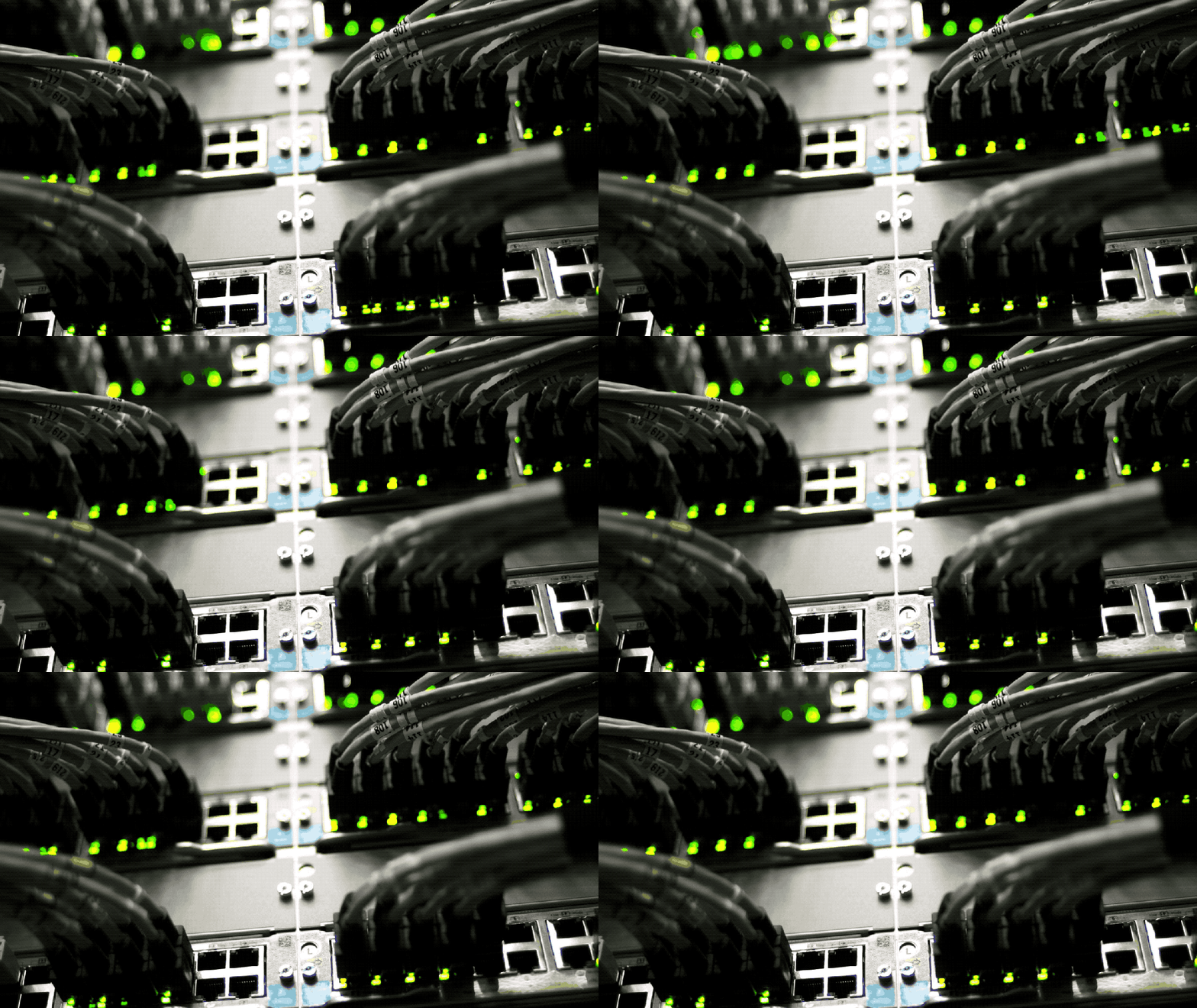
Imagine the little box in your home that brings you the internet, sitting quietly and blinking its lights. Well, that unassuming device just landed right in the middle of a major international tech debate. The U.S. government, through its Federal Communications Commission, or FCC, recently made a big move: they’ve banned the import of all new consumer routers that are manufactured overseas.
This isn't about the router you already have, thankfully. The new rule only applies to routers that would be imported into the country from now on. The FCC states that these foreign-made devices, particularly those coming from certain countries, pose what they call "unacceptable risks" to America's national security and digital safety. They believe these routers could be exploited by malicious hackers to get into our home networks, disrupt online services, and even enable cybercrime or surveillance.
The FCC specifically called out hacking groups backed by China, like Volt, Salt, and Flax Typhoon, as major concerns. These groups have a history of exploiting vulnerabilities in various tech products to infiltrate networks. This ban is a direct response to those perceived threats, aiming to shut down a potential entryway for digital attacks right at the source: your internet connection point.
So, why are we talking about routers and national security in the same breath? For a long time, these devices, which are essential for connecting our homes and businesses to the internet, have been a prime target for both government-backed hackers and everyday cybercriminals. They are a gateway, and if someone gains control of your router, they can potentially see what you’re doing online, steal your information, or even use your internet connection to launch attacks on other unsuspecting targets without you ever knowing.
Globally, China holds a significant chunk of the consumer router market, reportedly around 60 percent. This means a vast number of the routers currently used in homes across the U.S. and worldwide likely come from Chinese manufacturers. The FCC’s decision highlights a growing discomfort with this heavy reliance on foreign, particularly Chinese, tech for such a crucial piece of our digital infrastructure. This isn't the first time the U.S. has flagged security concerns about foreign-made tech, but targeting consumer routers is a step that directly impacts everyday items in our homes.
What led to this moment is a series of escalating digital skirmishes. Groups like Salt Typhoon have been tied to hacking dozens of phone and internet companies worldwide, including some right here in the United States. Another group, Flax Typhoon, was accused by U.S. authorities of building a massive network of hijacked devices, or a "botnet," by targeting over 126,000 routers in the U.S. alone, plus thousands more globally. These incidents have put the spotlight firmly on the security of our foundational internet hardware.
So, why should you, an everyday internet user, care about this new FCC ruling? First, there's a practical impact on what you might see when you go to buy a new router. This ban could mean fewer choices in stores, as many popular brands rely on overseas manufacturing. If the supply of available routers shrinks, you might also see prices go up for the models that are still allowed. Essentially, the marketplace for these crucial devices could shift pretty dramatically in the coming months and years.
Beyond your wallet and shopping options, this move reflects a much larger, ongoing effort to reshape how our technology is made and where it comes from. Governments around the world are increasingly worried about "supply chain security," meaning they want to ensure that the vital components of our digital lives aren't compromised before they even reach our homes. This ban is part of a broader trend where countries are trying to reduce their reliance on tech from rival nations, creating what some call a "decoupling" of tech ecosystems. It’s a sign that the internet, once seen as borderless, is becoming increasingly segmented by geopolitical concerns.
Now, let's talk about some honest concerns surrounding this decision. The FCC made this sweeping ban without publicly providing specific evidence that U.S.-made consumer routers are inherently more secure than foreign-made ones. This lack of transparency raises questions about the basis for such a broad action. What's more, some of the very hacking groups cited by the FCC, like Flax Typhoon, have been known to exploit vulnerabilities in both foreign-made and U.S.-made routers, including those from major American networking companies like Cisco. This suggests that the issue of cybersecurity might be more complex than simply where a device is manufactured.
There's also a curious wrinkle in the FCC's stance. While FCC Chairman Brendan Carr has been a vocal proponent of securing U.S. cyberspace and critical infrastructure, he was also one of two commissioners who voted a few years ago to scrap cybersecurity rules that required telecom operators to secure their systems from unauthorized intrusions. This history creates a bit of a mixed message, leaving some to wonder about the consistency of the regulatory approach to digital security across different sectors. It's a complex dance between national security, economic implications, and maintaining a consistent policy.
So, what happens next? A lot remains uncertain. Manufacturers that currently produce routers overseas will have to figure out if they can shift production to meet U.S. regulations or if they'll seek special exceptions, which might be granted by departments like Defense or Homeland Security. We'll need to watch how the market adapts, what new router models emerge, and if there's any noticeable impact on pricing or availability for consumers. This decision could also prompt responses from other countries, potentially leading to a tit-for-tat in tech trade policies. Ultimately, time will tell if this ban truly strengthens our online defenses or if it creates new challenges for consumers and the tech industry.
Considering this major shift, do you think banning technology based on its country of origin is an effective way to improve cybersecurity, or does it risk creating more problems like reduced consumer choice and higher prices? And on a related note, how much responsibility do you believe device manufacturers, governments, and individual users each have in ensuring the security of our home internet devices?
Filed under: TechPolicy, RouterBan, Cybersecurity, NationalSecurity, SupplyChain